Showing posts with label deputyship. Show all posts

Sunday, 16 December 2012

Should Parents Intervene in their Child's Medical Treatment?


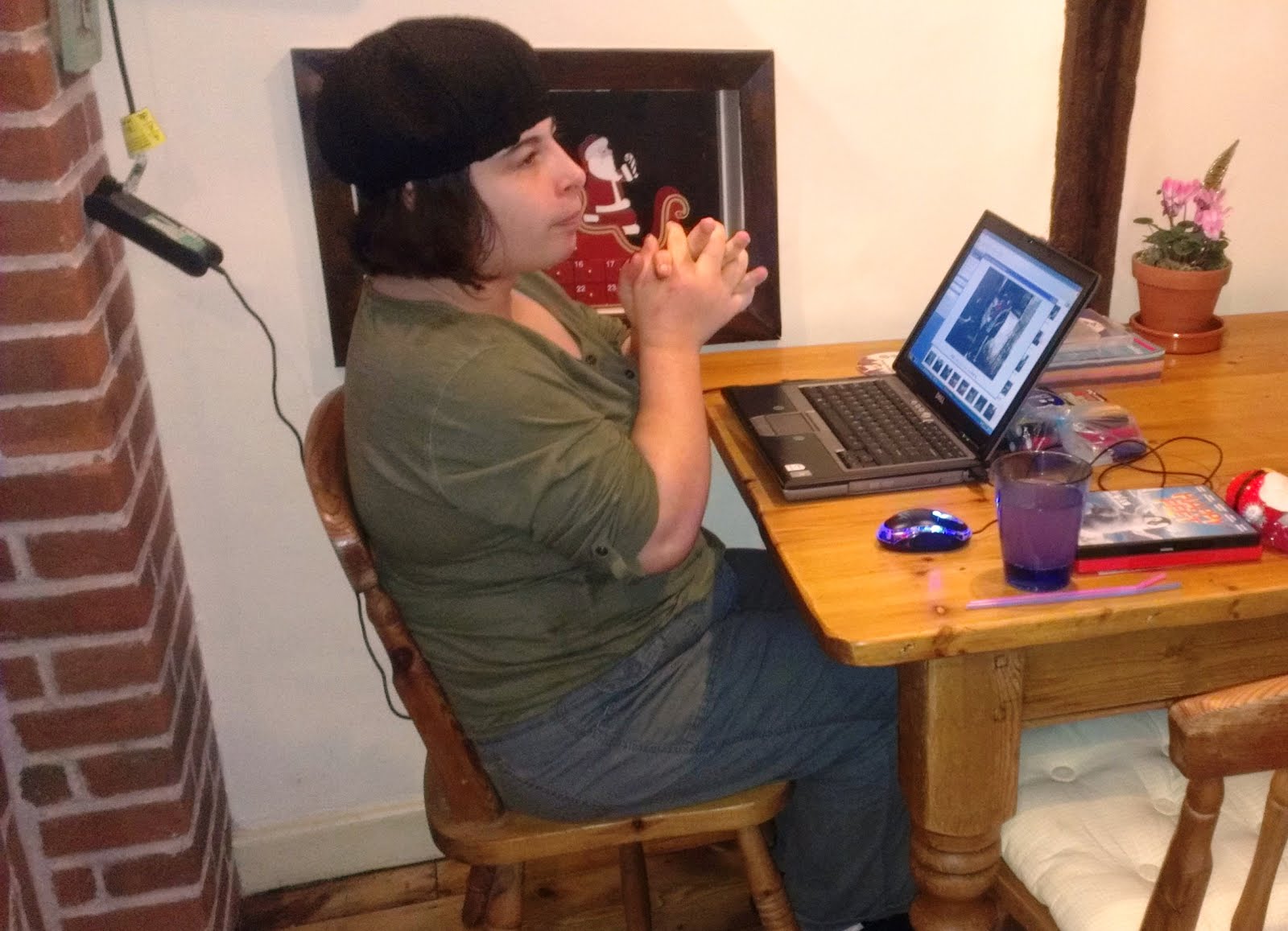
Yesterday, with typical hand-clasp posture, hat on indoors and sleeves rolled up

This question ignited fierce debate when Sally Roberts ran away with her 7-year old son to prevent his radiotherapy cancer treatment for a brain tumour.
http://www.dailymail.co.uk/femail/article-2246877/Sally-Roberts--disappeared-Neon-prevent-having-radiotherapy--talks-ITV-Daybreak.html

However, I believe that Sally Roberts deserves sympathy, not condemnation, especially by ill-informed people online who hadn’t read the whole story. She is obviously frightened & has her son's best interest at heart, even if she may be misguided. Having your child’s life under threat is the most terrifying prospect ever and I can see how it could temporarily unbalance your mind.

I completely understand the need for the courts to step in - parents should have a say in their children's treatment but not necessarily the final decision. I’ve often felt like running away with Chrissy to take charge of her treatment but common sense has prevailed and enabled me to take the longer view. Such an impulsive act could lose me my Deputyship, which means that I’m appointed by the courts to make decisions on Chrissy’s behalf as she lacks capacity to manage her own welfare and affairs. Ultimately, this could leave me powerless to protect her interests in future.

Having said that, I have at times taken a very strong stance over Chrissy’s medical treatment, and it has led to clashes. I know my child’s long, complex medical history better than anyone and always fight her corner if I disagree with her doctors.

I know all too well the feelings of helplessness & desperation when you fear that your child's medical treatment could be doing them more harm than good. Primal instincts take over - I made a rash decision on holiday to stop a treatment that I felt was causing ill-effects – Chrissy's antipsychotic. I held my hands up afterwards & acknowledged that it was a step too far but there had been so many bureaucratic delays over starting the process that I felt desperate. Although her clinicians put her back on the antipsychotic when she returned to the assessment and treatment unit, my actions had the desired effect - although I hadn't done it from a conscious desire to manipulate events. A tapered withdrawal process was started immediately.

Since then, Chrissy has gone from strength to strength. Re-reading my blog post from that holiday, I see that I said Chrissy’s mobility had declined with age – although she’s only 28. I was wrong. Now her meds are sorted out her agility has improved. I’m not sure why, as she's still overweight - maybe she felt dizzy or had vertigo? Her life has been transformed by these long-awaited medication changes. The high levels of self-injury and disrobing that effectively imprisoned her have now reduced so significantly that she is able to go out and about again routinely. As I write this, Chrissy is sitting contentedly next to me turning the pages of her Argos catalogue and pointing out different pictures she likes. Her concentration span and focus have improved no end and she can amuse herself quietly for long periods of time now. Her quirky personality and sense of humour has returned. She laughs, dances and sings again, and notices everything that goes on around her. Last time I blogged about how she was settled enough to cope with a four-hour drive up to Staffordshire to visit her grandma for the first time in around four years.

Chrissy still has her ups and downs, and always will, and her epilepsy is a huge concern, but she is now back to her old self. I can’t emphasise enough how changed she was while on inappropriate medication. She rejected activities that she previously enjoyed, was too unsettled and unfocused to engage in anything for any length of time, and her cognitive abilities and vocabulary had shrunk along with her quality of life. She lost her personality. We thought we had lost her.

What on earth was it like for her? The only way she could express her torment was through violent self-injurious behaviour. There were times that she missed out on weekly visits home because she was so agitated and confused that she didn’t know what was going on, and I couldn’t even get her into my car. This was completely out of character - she looks forward to her home visits all week. Her younger sister even questioned whether her life was worth living at one point because she was suffering such a continual high level of distress. Behaviours included ripping her hair out of her head, leaving her partially bald, breaking her heel by banging it on the floor, gouging and biting her skin until it bled, and sustaining a multitude of bruises, swellings and lacerations all over her body and face through punching, pinching and throwing herself around. She also lashed out at other people, which she only does on occasion when extremely distressed.

Now her hair has grown back and her body is rarely marked from self-injury. Her face has lost its haunted look.

Chrissy can’t express how she feels, and Ian and I often speculate on how she must have felt when she was so distressed on inappropriate medication. There’s nothing worse than watching your child suffer and until you are in a situation like Sally Roberts’s you can’t say what you would or wouldn't do.


I am a SWAN UK (Syndromes without a Name) blogger
MyButton

Tuesday, 3 July 2012

Advocacy & Learning Disabilities: Special Saturday

Going with this week's Special Saturday theme - sharing my life with Chrissy has made me acutely aware of the unique role advocacy plays in supporting individuals with learning disabilities.

You may think that a person with learning disabilities who has a pro-active parent and/or care manager (& many don’t) may not need an advocate - but an advocate is uniquely placed to act with minimal conflict of interest. This conflict of interest issue is key to advocacy – in any situation other people will have interests that will conflict or compete with the interests of the person with a disability. Taking independence skills as an example - a parent may be over-protective and make choices for the person with learning disabilities, stifling their ability to gain independence skills. Due to funding constraints, a care manager may be reluctant to provide the necessary care support for them to gain independence skills. The vulnerable person’s relationship with an advocate is different to those with relatives or professionals in that it is a partnership built on trust and confidentiality. By identifying and minimilising any of their own interests & needs that may conflict with the person's they're supporting, an advocate supports them to put their choices into effect. The advocate does not make choices for them or have a vested interest in outcomes of granting their choices.

Being independent, an advocate is in a unique position to identify what the person’s needs are and to and try to understand what it is like to be in their shoes. An advocate’s objectivity may enable them to focus on key issues in sometimes complex and sensitive situations and take action on the vulnerable person’s behalf. Their unique awareness of the person's wishes and choices may enable them to take the initiative by creating a sense of urgency and challenging other professionals.

People with a learning disability are often portrayed as less than human & their disability can lead to low status & a devalued role in society. They may experience discrimination, neglect, exploitation or abuse. Their human and legal rights may be denied, and even where rights exist, access to ways of enforcing them may be restricted. An advocate has a unique role in supporting the person with disabilities to access and exercise these rights.

Advocacy can also play a vital role if people with learning disabilities are confronted with situations they find difficult or they feel they are not being listened to. An advocate’s role may entail supporting their advocacy partner to make choices and express their views at meetings with professionals. It could mean being on the person’s side in situations where they could be taken advantage of, or fighting for the person’s right to lead a more fulfilling life.

As well as representing a person’s interests, an effective advocate may make information, advice and support services more accessible, and lead to access to different forms of advocacy, such as a solicitor or Citizens Advice Bureau. For example, the local CAB can support the individual to get the correct benefits or the Disability Law Service may be able to advise on legal situations.

To carry out their role successfully, an advocate must understand and be committed to the values and principles of advocacy, that regardless of whether or not we have a disability, we all have the same value and rights, and should be given the same opportunities to fulfil our potential for growth and learning and lead purposeful lives.

Finally, by offering conflict-free support and being on the person’s side, an advocate may enable people with learning disabilities to transform their lives by ‘exercising choice and control,’ as recognised by the Government White Paper of 2001, ‘Valuing People.’ Ultimately, advocacy serves to promote the welfare, wellbeing and social inclusion of people with learning disabilities, to protect their human and legal rights, combat discrimination, and, overall, to improve their quality of life.


I have written this post as part of #Specialsaturday. Please join the cause by joining the facebook page - http://www.facebook.com/SpecialSaturday; following on twitter - @Specialsat and retweeting hashtag - #specialsaturday; reading and following the Special Saturday Blog - http://specialsaturdayhttp://www.blogger.com/img/blank.gif.org/home/

I am also a SWAN UK (Syndromes without a Name) blogger this this is part of our #definenormal blogging challenge at http://www.justbringthechocolate.com/define-normal/

Define Normal Badge

Sunday, 11 March 2012

Defining Normal

Chrissy tickling her feet at the top of the garden

Normal for us is leaving Chrissy on a locked ward & trusting paid strangers to be kind to her. It's letting go & accepting that a professional team does a better job than we can at home. It's acknowledging that once a week our lives will be both enriched & turned upside down by her visits. It's avoiding her self-inflicted wounds when I towel her dry after a bath. It's shaving her legs & wiping her bottom without a 2nd thought. It's reaping her gentle smiles, basking in her sunshine times & marveling over her different way of viewing the world.

Although Chrissy isn't at home full-time with us anymore, she is still a huge part of our lives. Most days it's normal for me to be writing to or speaking to one of Chrissy's doctors or other professional involved with her care. On my desk now is a letter about our Disability Living Allowance appeal. Behind me, ready for filing are documents relating to my application for Deputyship so I can legally act on Chrissy's behalf, ie sign a tenancy agreement if she moves to a rented supported living home. On the floor is a musical book for toddlers, entitled 'Bedtime Songs.' I guess an outsider looking in would be surprised to learn that it's a gift, waiting to be wrapped in pink Sleeping Beauty paper, for someone's 28th birthday.

All this has been our normal for so long, I've found #definenormal a huge challenge!


I have written this post as part of the #definenormal blogging challenge at http://www.justbringthechocolate.com/define-normal/
Define Normal Badge

And for #Specialsaturday. Please join the cause by joining the facebook page - http://www.facebook.com/SpecialSaturday
Following on twitter - @Specialsat and retweeting hashtag - #specialsaturday
Reading and following the Special Saturday Blog - http://specialsaturdayhttp://www.blogger.com/img/blank.gif.org/home/

Friday, 2 December 2011

Small Steps - A #Special Saturday Post

Over the past few weeks Chrissy's affairs have taken precedence over everything else - but it's been worthwhile.

I had a positive meeting with her new psychiatrist & was very impressed that he'd taken the time to read this blog! He referred to incidents I'd written about & it was clear he'd researched her chromosome disorder. He was open-minded and interested in exploring causes of the more intense clusters of self-injurious behaviours for which no environmental trigger has been identified. As Chrissy had settled down after a difficult month, he decided to withdraw the last 15mg of her Topiramate while introducing Pregabalin. I don't know if that's why we had such a challenging time with her. Her last spell of horrendous behaviour coincided with Topiramate withdrawal & it was similarly intense here yesterday. Her diva-ish behaviour has been off the scale - she's been moaning, obsessive, demanding & irritable. We did have a lovely cuddle with her on the settee while we watched Come Dine With Me but had to hold both her hands the whole time, effectively handcuffing us to her. A great way of getting our individed attention! She then kicked off again later & wouldn't go to bed until after midnight.

I'm worried about how Chrissy will cope at Xmas, particularly as last year was so awful. She will obviously be here with us on Xmas Day, as she's always been, but when more of the family visit on the 28th it could be apocalyptic. Her stripping is particularly difficult to manage when there are young men & children around, as you can imagine!

Anyway, on a different note, another positive outcome came from the 1st stage of our appeal process re the long-standing funding dispute between the local authority & NHS trust. The dispute has caused a number of problems that I can't elaborate on publicly at the moment but our biggest recent concern was that no one was taking care management responsibility. We need to plan for Chrissy's discharge from hospital & the type of 'bespoke service' she needs may, according to estimates from the Challenging Behaviour Foundation, take about 12-18 months to organise. So, although she needs to stay in hospital until meds changes are completed, we need to start planning now.

At our appeal meeting the NHS trust admitted to 'horrendous' errors in the healthcare assessment process, & offered to start from scratch with a retrospective assessment. This means combing through Chrissy's records from the past three years. I was advised that to see those records, I'd have to apply to the Court of Protection for Deputyship, which puts my responsibilities for Chrissy on a more legal footing. I filled in all the forms, so I could make decisions re property as well as health & welfare, as she may end up with a home of her own. The forms are tedious & repetitive, & took me nearly a day to complete but they're done now. I'm sure it will be worth it in the long run!


Please join the cause by joining the facebook page - http://www.facebook.com/SpecialSaturday
Following on twitter - @Specialsat and retweeting hashtag - #specialsaturday
Reading and following the Special Saturday Blog - http://specialsaturdayhttp://www.blogger.com/img/blank.gif.org/home/